
Reliable level detection is one of the most important parts of any wastewater pumping station. Pumps, control panels and telemetry can all be operating correctly, but if the level sensing system gives the control system the wrong information, the pumping station can quickly become unreliable.
Wastewater is a demanding environment. Wet wells can contain rags, wipes, grease, fats, oils, sludge, foam, turbulence and constantly changing conditions.
This is why the choice of level sensing technology matters. Float switches, ultrasonic sensors and radar all have their place, but each technology has different characteristics and potential limitations.
FOGRod® takes a different approach by using multiple conductive electrodes positioned at defined levels on a single probe.
At a glance
| Feature | FOGRod® | Floats | Ultrasonic | Radar |
|---|---|---|---|---|
| Moving parts | No | Yes | No | No |
| Multiple level points | Yes | Multiple floats | Continuous | Continuous |
| Contact with liquid | Electrodes | Float | No | No |
| Can tangle | No | Yes | No | No |
| Pump control | Yes | Yes | Yes | Yes |
| Independent backup | Yes | Yes | Yes | Yes |
01 / FLOAT SWITCHES
The problem with floats in wastewater
Float switches are widely used in pumping stations because they are simple, inexpensive and easy to understand.
The problem is that a float is a mechanical device operating in an environment that can be anything but mechanical-device friendly.
Rags, wipes, grease, fat, oil and other debris can become caught around float cables or the float itself. Cables can also become tangled with other equipment inside the wet well.
A float can therefore remain electrically healthy while no longer providing a reliable indication of the actual liquid level.
The problem isn't necessarily the switch. The problem can be that the switch is no longer able to move freely.
REAL-WORLD REFERENCE
From conventional floats to FOGRod®
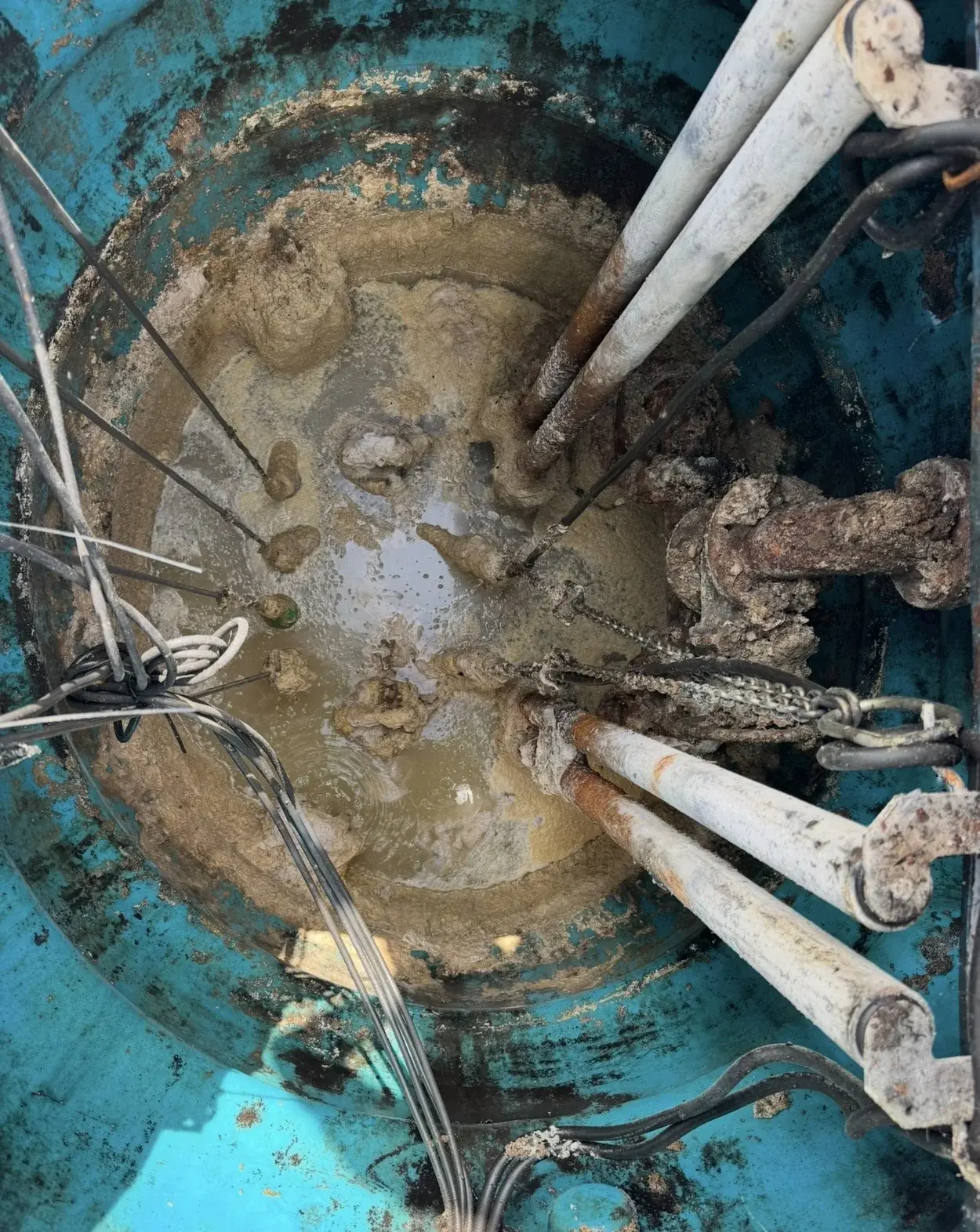
Wastewater pumping stations can be a challenging environment for conventional level control equipment. The following real-world reference shows the type of conditions that can be encountered in wastewater applications.
BEFORE
Conventional Float Switches
AFTER
FOGRod® Conductive Level Sensing
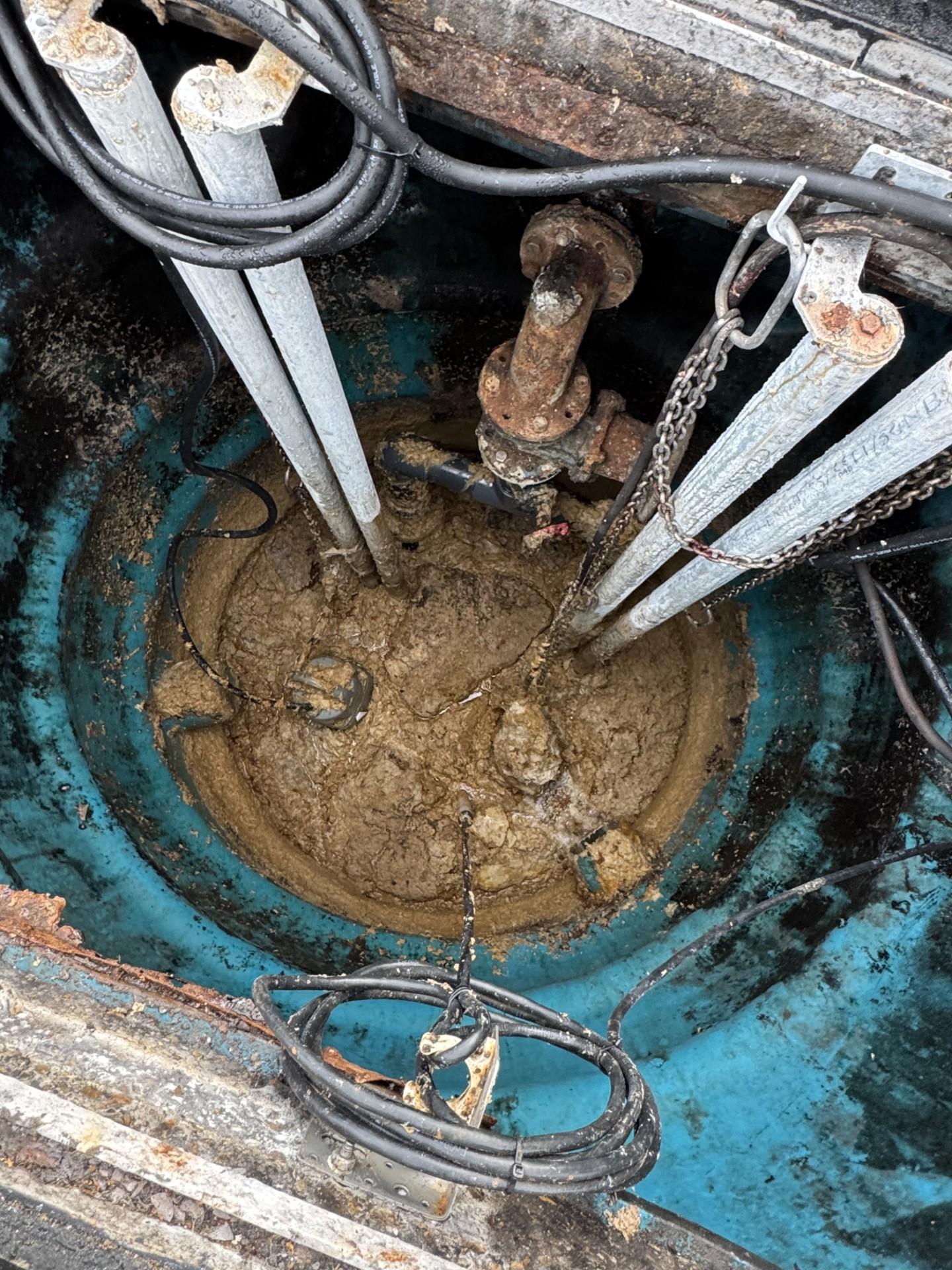
Real-world wastewater application reference demonstrating the difference between conventional float-based level control and FOGRod® conductive level sensing.
Conventional approach
Mechanical floats
- • Moving mechanical components
- • Suspended cables inside the wet well
- • Potential for fouling and obstruction
- • Multiple floats may be required for multiple levels
FOGRod® approach
Conductive level sensing
- • No moving float mechanism
- • Multiple level points on one probe
- • Conductive electrode technology
- • Designed for demanding wastewater environments
The important difference
FOGRod® changes the way level detection is achieved. Instead of relying on a number of freely moving floats, the system uses fixed conductive electrodes positioned at defined levels.
FOGROD®
No moving float mechanism
FOGRod® doesn't rely on a float physically moving through the wastewater.
The probe remains positioned in the wet well while the liquid level rises and falls around it. As wastewater reaches each electrode, the system detects the conductive path and provides the corresponding level signal.
This removes the moving float mechanism from the level-control system and allows multiple level points to be incorporated into a single probe.
View FOGRod Products →02 / ULTRASONIC
FOGRod® vs ultrasonic level sensing
Ultrasonic level sensors provide non-contact continuous level measurement and can be an excellent choice for suitable applications.
However, ultrasonic measurement relies on an acoustic signal travelling to the liquid surface and returning to the transmitter.
Wastewater wet wells can present challenging conditions, including foam, turbulence, condensation and unwanted reflections from surrounding structures.
For applications where ultrasonic measurement is proving unreliable, FOGRod® provides a completely different method of detecting level.
03 / RADAR
FOGRod® vs radar level sensing
Radar level measurement is a highly capable technology and is particularly useful when continuous non-contact measurement is required.
However, radar installations still require appropriate mounting, configuration and consideration of the physical environment inside the wet well.
Ladders, guide rails, cables, pipework, inlets and other structures can all be relevant when positioning a non-contact level instrument.
Radar can be the right solution when detailed continuous level measurement is required. But where the requirement is simply reliable pump start, pump stop, high-level alarm and low-level protection, a multi-point conductive system can offer a simpler approach.
CONDUCTIVE LEVEL SENSING
How FOGRod® works
FOGRod® uses conductive electrodes positioned at different heights along a single probe.
When the wastewater reaches an electrode, the system detects conductivity and identifies that level point.
As the liquid continues to rise, additional electrodes are reached. As the liquid falls, the electrodes become dry again.
This provides a straightforward way of establishing multiple level points without requiring several individual float switches.
Where can FOGRod® be used?
Sewage pumping stations
Wastewater wet wells
Industrial wastewater
Storm tanks
Sewage treatment works
Pump protection
Float replacement projects
Level sensing redundancy
REDUNDANCY
FOGRod® doesn't always have to replace radar or ultrasonic
One of the biggest advantages of FOGRod® is that it can also be considered as an independent backup to an existing level measurement system.
A pumping station can use radar or ultrasonic for continuous level measurement while FOGRod® provides independent pump protection or high-level detection.
Using different measurement principles can provide additional resilience where level control is critical.
Why choose FOGRod®?
A simpler approach to wastewater level detection
There is no single level sensing technology that is perfect for every application.
Floats have their place. Ultrasonic has its place. Radar has its place.
But wastewater pumping stations are demanding environments, and the most sophisticated technology isn't always the most appropriate solution.
FOGRod® provides a different approach using conductive multi-electrode level sensing. For pumping stations suffering from tangled floats, difficult level measurement or the need for independent level protection, it can provide a practical alternative.
FOGROD®
Looking for a better level sensing solution?
Explore the FOGRod® range or contact us if you need help selecting the right system for your wastewater pumping station.